I don’t travel often on the underground but I have noticed over recent years that noise levels have increased to the extent that I have to put my fingers in my ears to avoid real pain. I don’t believe my hearing is any more sensitive that the next person so I assume most other travellers experience the same thing.
Part of my day job involved assessing the risks my employees face on construction sites and one of the potential risks is tools such as drills and breakers and the noise they make depending on what task you are carrying out.
The sort of work that we do doesn’t involve continuous noise that you might experience in a factory but rather shorter blasts. This type of risk makes operatives on site be less aware; they aren’t wearing hearing protection all the time so making sure they wear ear protection when they need means frequent reminders, on site checks and health surveillance.
I am obliged to monitor sound levels and provide hearing protection when certain levels are reached. I’ll quote the Health & Safety Executive website.
The Control of Noise at Work Regulations 2005 (the Noise Regulations) came into force for all industry sectors in Great Britain on 6 April 2006 (except for the music and entertainment sectors where they came into force on 6 April 2008).The aim of the Noise Regulations is to ensure that workers’ hearing is protected from excessive noise at their place of work, which could cause them to lose their hearing and/or to suffer from tinnitus (permanent ringing in the ears).The Control of Noise at Work Regulations 2005 replace the Noise at Work Regulations 1989.The level at which employers must provide hearing protection and hearing protection zones is 85 dB(A) (daily or weekly average exposure) and the level at which employers must assess the risk to workers’ health and provide them with information and training is 80 dB(A). There is also an exposure limit value of 87 dB(A), taking account of any reduction in exposure provided by hearing protection, above which workers must not be exposed.
The full text of the Regulations can be read here
It is also worth noting that the Health & Safety at Work Act 1974 Section 3 states
It shall be the duty of every employer to conduct his undertaking in such a way as to ensure, so far as is reasonably practicable, that persons not in his employment who may be affected thereby are not thereby exposed to risks to their health or safety.
This Act makes the safety and health of travellers on the London transport system the responsibility of the employer. What then is being done to protect the hearing of those people that travel in the underground every single day and are exposed to noise?
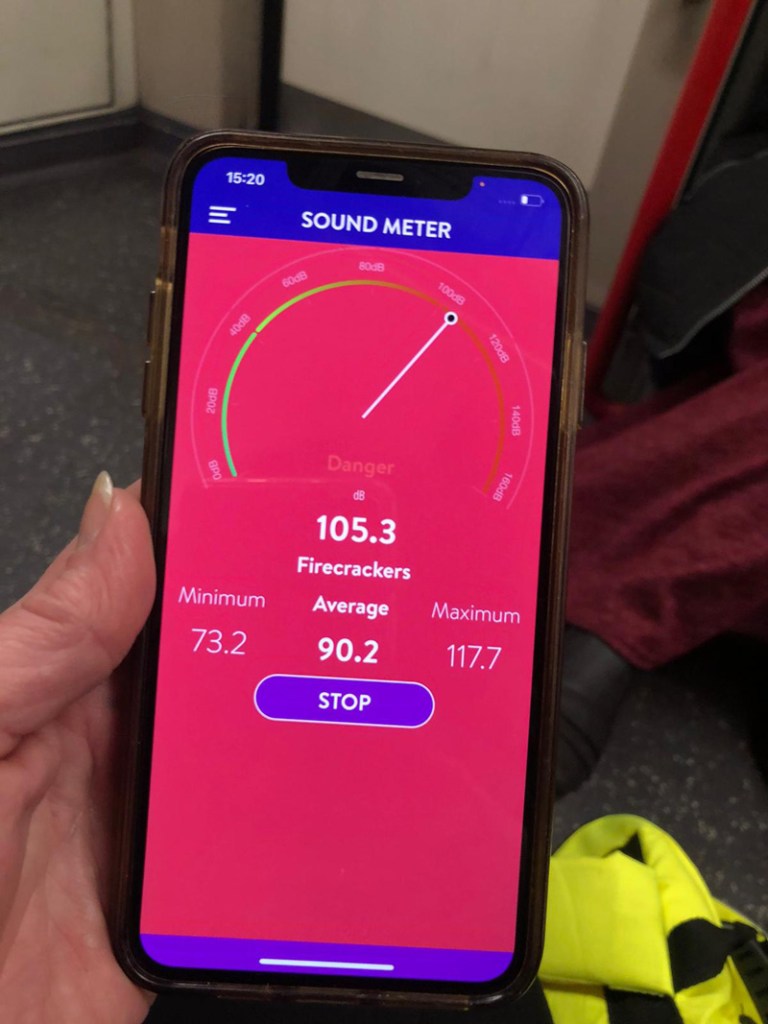
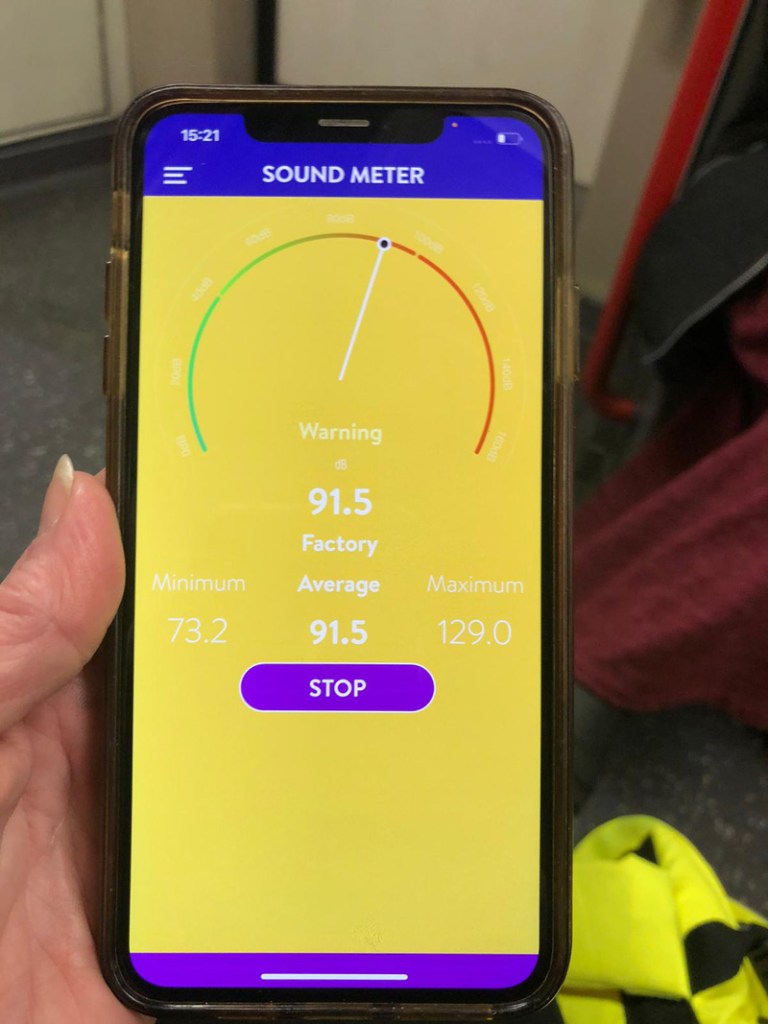
I have used my iPhone with a couple of different apps to check sound levels and I have taken some images with another phone showing that the photographs were taken on the tube rather than just a screen capture that could be anywhere.
I have checked how accurate the iPhone is using proper site sound level equipment and it is surprisingly accurate.
Both images were taken on 3rd January 2024.
There are a couple of interesting YouTube videos addressing noisy tube trains. The first is by one of the channels that I follow. The presenter makes lots of different content regarding travel generally.
Why is the Underground so LOUD? – YouTube
The second is a video from Zone1Hearing.
Unbelievable Noise Levels on the London Underground: What You Hear Will Shock You! – YouTube
Lastly, a report from BBC London filming a team of audiologists as they test noise levels across the network. This was in 2019 and clearly nothing has been done.
Will the Tube damage your ears?- BBC London – YouTube
These reports talk about levels in excess of 100dB but as you can see from my images I recorded 129dB. This is dangerous to hearing for periods over 30 seconds.
Apparently tube drivers can “request” hearing protection but a proper risk assessment should mandate it for all drivers. No doubt when the drivers end up with hearing loss they’ll be blamed for not requesting the equipment and will not be compensated for a heath issue caused by their employement.
Jago’s video highlights that the cause relates to curves in the track but those curves have always been there and the noise levels have not. New tracks don’t have this problem.
There is general advice (not from TFL) that travellers should use noise cancelling headphone and this seems a sensible precaution until a proper solution is found although I doubt this will happen any time soon. Can you imagine London grinding to a halt as sections of tubeline is taken out of service to remediate?
I wonder if this is such an issue on other systems? London is one of the oldest transport networks so there will always be issues relating to the age and design that newer networks do not have.
If you know about other networks and how they deal with nosie, leave a comment. If you travel more regularly than me on any of these old lines, has your hearing been affected? Do you get ringing in your ears or a sense of muffled hearing at the end of your commute?
 .
. 
Leave a comment